





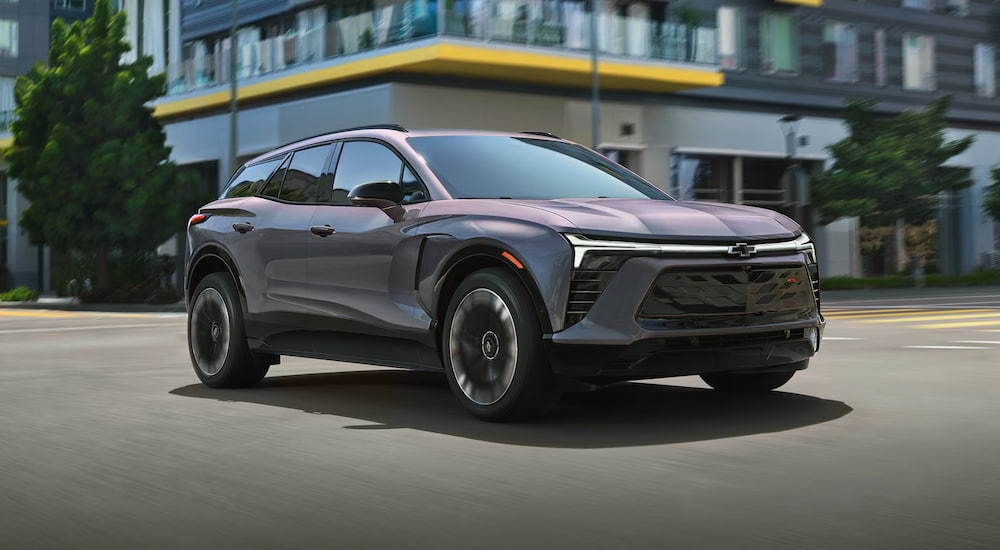
Bursting onto the scene in 2024, the first Chevy Blazer EV for sale took one of the bowtie brand’s most popular midsize SUVs and gave it an electric makeover that made it an immediate contender in the fast-growing segment. Honda now looks to follow suit with its own midsize Prologue EV, which will represent the brand’s first all-electric SUV.
If the two models seem remarkably similar, there’s a good reason: the Prologue was developed in collaboration with General Motors and is based on the same Ultium architecture and BEV3 platform as Chevy’s own midsize EV. In fact, the two share a surprising number of features, including an infotainment system, climate control system, and some other important design elements, but that doesn’t mean there aren’t a few key disparities between these two all-electric SUVs. These EVs vary in exterior design and styling and offer a decidedly different driving experience based on each brand’s on-road ethos.
To help you decide between the Honda Prologue and Chevy Blazer EV, we’ve compiled a brief breakdown that outlines some of the key differences between these two crossover EVs. We’ll outline each model’s performance stats and range and see how they compare when you really put the pedal to the metal.
Chevy Puts a Premium on Performance
The Blazer EV and Prologue might share the same general design, but the two models are easy to differentiate when you start diving into some of the performance-related details. While pretty stark, these differences shouldn’t come as much of a surprise. Honda has long been known for producing stolid, reliable vehicles that deliver consistent—if not enthralling—performance.
This formula has made the brand a favorite among drivers who are just looking to get from point A to point B, but Chevy has embraced a different approach altogether. With a legacy that includes producing prolific sports and muscle cars like the Corvette and Camaro, drivers won’t be surprised to learn that Chevy has brought the same performance-minded attitude to the EV segment.
The Blazer EV’s expansive engine lineup speaks to Chevy’s sporty spirit. Those looking for a value-packed option can choose between the LT FWD and LT eAWD. The base trim in FWD offers a respectable 220 hp and 243 lb-ft of torque thanks to its single-motor setup, but the eAWD version shines with a dual-motor design that sees the SUV produce 300 hp and 355 lb-ft of torque.
The Blazer’s RS trim is also offered with FWD and eAWD powertrains that match the stats of the LT, but the addition of a rear-wheel drive option brings a little extra power into the mix. The RS in RWD elevates the driving experience with 365 hp and 325 lb-ft of torque on tap, but even that’s no match for the new high-performance SS trim. Rated for 557 hp and 648 lb-ft of torque (or up to 615 hp when driven in Chevy’s Wide Open Watts Mode), the SS’s dual-motor design gives the EV a top speed of 130 mph.
While sharing a number of features and design elements, the Prologue simply fails to keep pace in terms of performance. Honda offers its new EV in three trims, just like the Blazer, but the lack of powertrain personalization puts the Prologue at a disadvantage. No matter which trim you choose, from the entry-level EX to the Touring and Elite, Honda has limited the EV to just two options.
All FWD models deliver 212 hp and 236 lb-ft of torque, while AWD ones make 288 hp and 333 lb-ft of torque. That’s not too far from the norm in the midsize category, but it pales in comparison to the sort of high-speed thrills that the Blazer EV can offer. Sure, not every brand is going to take on an ambitious automotive experiment like the Blazer EV SS, but when a vehicle built on an identical platform and EV architecture can’t even provide half as much power, excuses are hard to come by.
Speeding Into the Future
Figures like horsepower and torque can be a little hard to wrap your mind around, and they often don’t provide any context for the experience you’ll have when you’re actually seated behind the wheel. Luckily, there is one key test that can go a long way toward illustrating the difference between the two models. The ability to accelerate from zero to 60 mph is a useful metric for both performance-obsessed drivers and those just looking to hold their own in highway traffic. So, how do the Chevy Blazer EV and Honda Prologue compare when it comes to their sprint times?
The Prologue is certainly no slouch, with the dual-motor setup allowing the range-topping Elite trim to get up to 60 mph in between 5.8 and 6.2 seconds. That’s a respectable figure for the midsize SUV segment, but Chevy makes the Prologue look like a relative slowpoke with a blistering zero-to-60-mph time that would put some sports cars to shame. In fact, the Blazer can reach cruising speed in just 3.4 seconds, which is faster than some versions of the BMW M3, Dodge Challenger, and Ford Mustang. That sub-four-second figure might seem like a typo, but it’s refreshingly real thanks to the inherent advantages of the EV approach, along with some clever next-gen engineering on the part of Chevy.
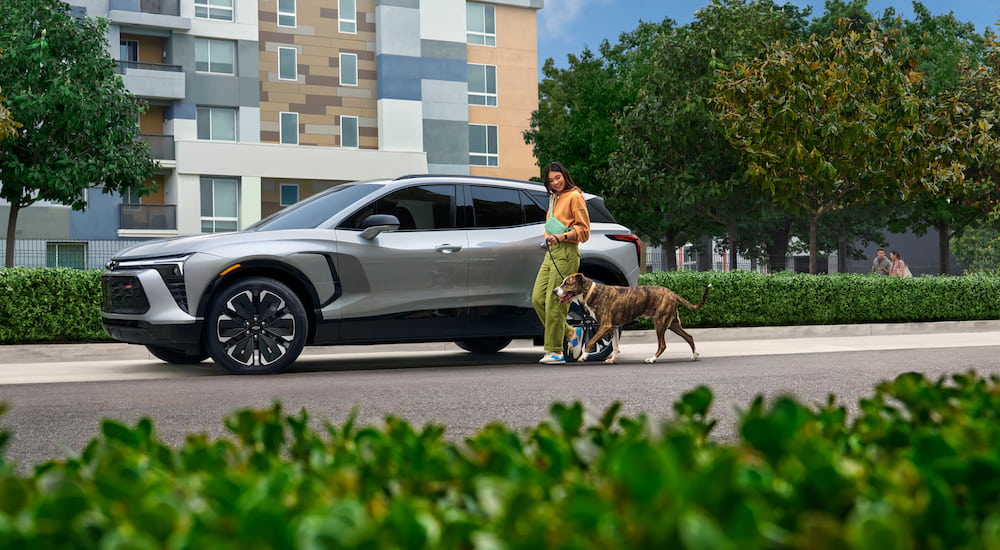
Unlike their gas-powered predecessors, which often take a considerable amount of time to reach peak performance, an EV can churn out all the torque a driver could ask for the moment you stomp on the pedal. This near-instant torque allows the Blazer EV to immediately put itself into action—but those seeking a real edge-of-your-seat experience need look no further than the range-topping SS trim. The SS’s dual-motor powertrain and eAWD setup certainly aid in acceleration, but it’s the introduction of the Wide Open Watts Mode that really ups the ante.
Designed to maximize straight-line acceleration, W.O.W. Mode overrides the SUV’s propulsion settings and tweaks the pedal maps, cooling, AWD, and motor to give the EV 615 hp and provide a breathtaking experience that makes the model one of the most thrilling SUVs to ever hit the market. In fact, the Blazer EV SS is the fastest SS trim ever produced by Chevy, which is especially impressive from a brand that gave the world the legendary Camaro SS.
Ranging Further Than Ever
Performance and acceleration are two important factors to consider when comparing vehicles like the Blazer EV and Prologue, but their all-electric design introduces another important metric into the equation. Limited driving range is commonly cited as one of the key hurdles to widespread EV adoption, but the Blazer EV makes a convincing argument for the economical segment with up to 334 miles of range. In order to achieve that figure, you’ll have to go with the RS’s ultra-efficient rear-wheel drive setup, but every Blazer EV manages to clock in close to the important 300-mile mark.
The eAWD versions of the LT and RS offer an EPA-estimated 283 miles of range, while the SS sacrifices a little distance in the name of performance with around 250 miles on the table. This might put the SS at a disadvantage when compared to the rest of the lineup, but it’s a small price to pay for the ability to reach 60 mph in under four seconds.
With its lower output and paltry performance stats, one might expect the Prologue to easily outshine the Blazer EV when it comes to range, but that’s simply not the case. The single-motor FWD models can achieve around 296 miles of range, which, while impressive, is surprisingly close to Chevy’s SUV. The AWD EX and Touring trims have their range reduced to 281 miles, while the AWD Elite delivers just 273 miles. That number might be even lower in real-world conditions, with at least one tester logging just 240 miles behind the wheel of the AWD Elite. That’s a far cry from the current industry average of 283 miles, and it’s a little hard to excuse when compared to the much faster Blazer SS.
The Blazer EV and Prologue share the same platform—an 85.0-kWh battery and 150-kW DC Fast Charging ability—which makes the Honda’s relative lack of range something of a red flag. If the Prologue even came close to matching the Blazer EV’s horsepower, one might be able to excuse range-related issues, but that’s simply not the case.
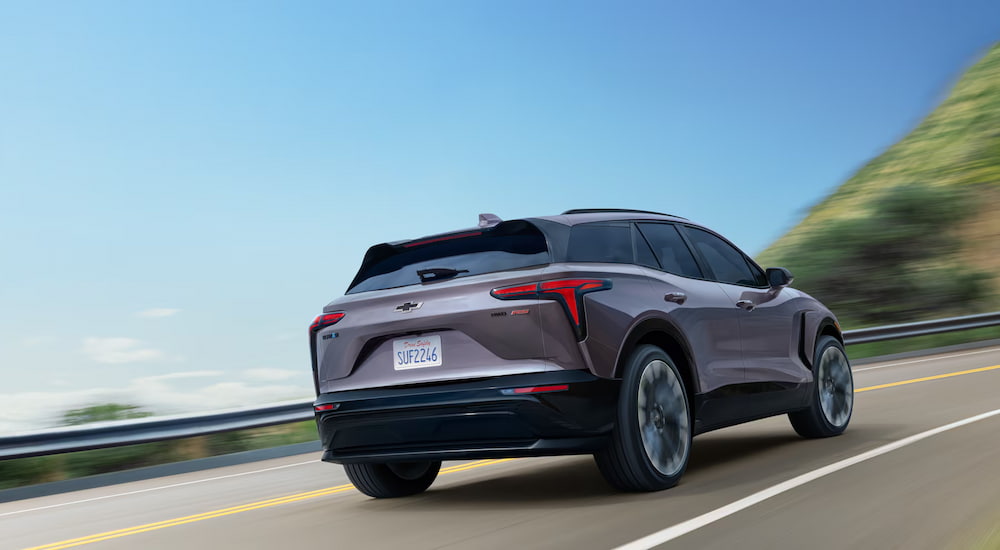
Which Is Better, the Blazer EV or the Prologue?
Ultimately, choosing between the Blazer EV and Prologue comes down to personal preference, but if you’re the type of driver who values customization and performance, the Blazer EV represents the obvious choice. While the two SUVs might share a considerable amount of DNA, they really couldn’t be much different from a performance perspective.
Chevy has clearly prioritized power when designing the midsize model. The RS and SS trims offer the sort of performance that Chevy has long been known for while embracing a new, all-electric design that provides some distinct advantages in terms of efficiency. The Prologue fails to distinguish itself in any meaningful way. It might offer slightly better range depending on the trim, but with a higher starting price and relatively paltry performance, it’s hard to make a case for Honda’s new EV.
Chevy has made some important improvements for the new model year, adding a stylish new appearance package, Enhanced Automatic Parking Assist, and the scintillating new SS trim to the lineup. If you want to experience the Blazer EV for yourself, come by LaFontaine Chevrolet Buick GMC of St. Clair and test drive the 2025 model today.
Connect with us


- Buick Dealer
- Buick Dealer Near Port Huron
- Buick Envista for Sale
- Chevy Blazer EV for Sale
- Chevy Blazer for Sale
- Chevy Dealer
- Chevy Dealer Near Clinton Township
- Chevy Dealer Near Port Huron
- Chevy Dealer Near Washington Township
- Chevy Lease Deals
- Chevy Silverado 1500 for Sale
- Chevy Silverado for Sale
- GMC Acadia for Sale
- GMC Dealer
- GMC Dealer Near Clinton Township
- GMC dealer near Port Huron
- GMC Hummer EV for Sale
- GMC Sierra 1500 for Sale
- GMC Terrain for Sale
- Used Car Dealership
- Used GMC Dealer